INSTALLATION / GAME
Kunsthaus Bix Facade
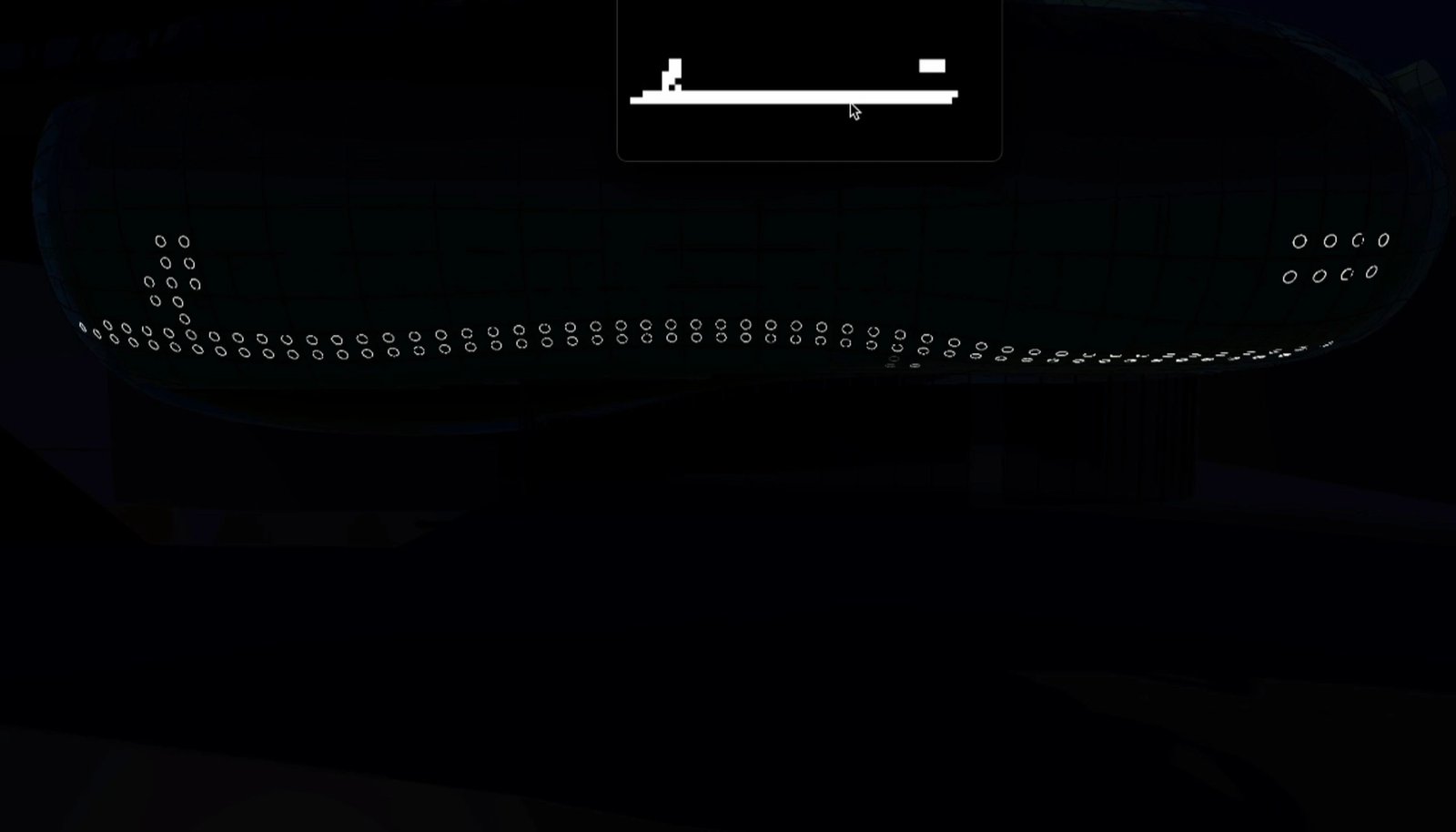
A phone-controlled Dino game on the Kunsthaus Graz facade, one light per pixel, visitors taking turns.
- Year
- 2025
- Duration
- 1 Months
- Discipline
- Digital Art
- Team
- Seymur Mammadov
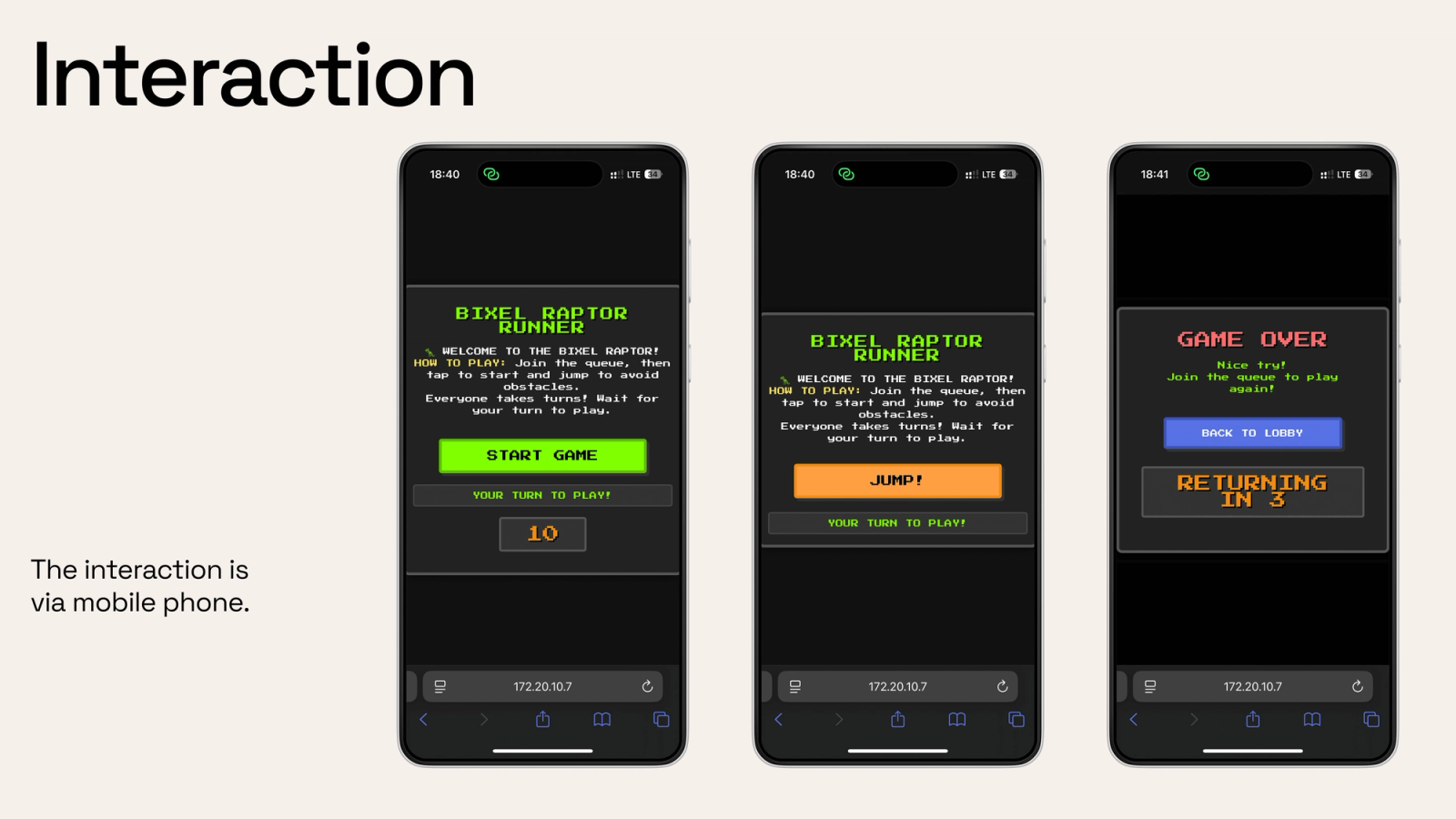
Dino Game is a site-specific, phone-controlled projection on the Kunsthaus Graz facade. Visitors join a local network, open a webpage, and take turns jumping the dino—no scores, no leaderboards—to keep play light, inclusive, and fast-moving. Built in Unity, the game rasterizes each facade light as a pixel, translating familiar browser nostalgia into a shared, urban-scale moment that rewards curiosity and turn-taking over competition.
Challenge
Translating a standard game to an architectural light grid required rethinking resolution, proportions, and collision timing each lamp equals one pixel. We built a virtual facade model, redesigned sprites, and tuned speeds to prevent distortion. Networking was equally hard: securing external access, minimizing phone-to-projection latency, and managing a fair turn queue. Unity implementation demanded custom scaling logic and per-frame sampling to keep motion legible on a low-density display.
Results
We delivered a stable Unity build with a web controller, public network onboarding, and a lightweight queue for continuous flow. Playtests and the live event showed high engagement: visitors quickly understood the single-tap control, laughed, recorded, and moved on exactly the intended noncompetitive rhythm. The façade rendering remained crisp at distance, and the system ran reliably through peak foot traffic, demonstrating robust input handling across diverse devices.
Final Outcome
App
Inside of the project
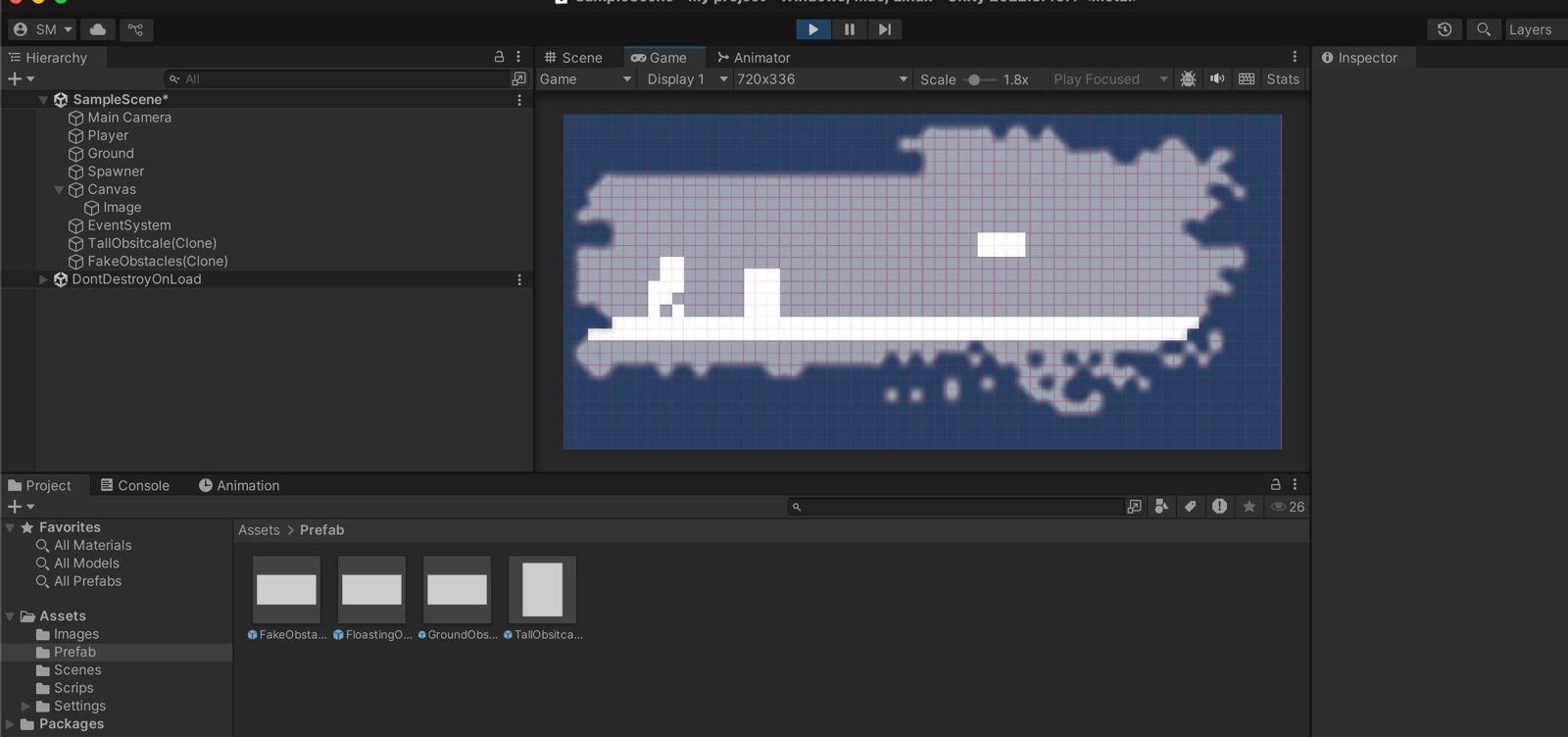
Stack







Github Access
Conclusion
The project proved that minimal mechanics, fair turns, and architectural pixels can turn a museum facade into playful public space. I learned to reconcile UX goals (clarity, inclusivity, throughput) with technical constraints (grid resolution, latency, scaling). Next steps include cooperative two-player modes, accessibility cues for color/contrast, haptic countdowns on phones, and timed “showcase” sessions—while preserving the core principle: quick joy over high scores.