APP
FH-Room Checker V1
From one poster in the Design Faculty to around 200 regular users.
- Year
- 2026
- Duration
- 6 Months
- Discipline
- App Development
- Team
- Seymur MammadovJakob Schnurrer
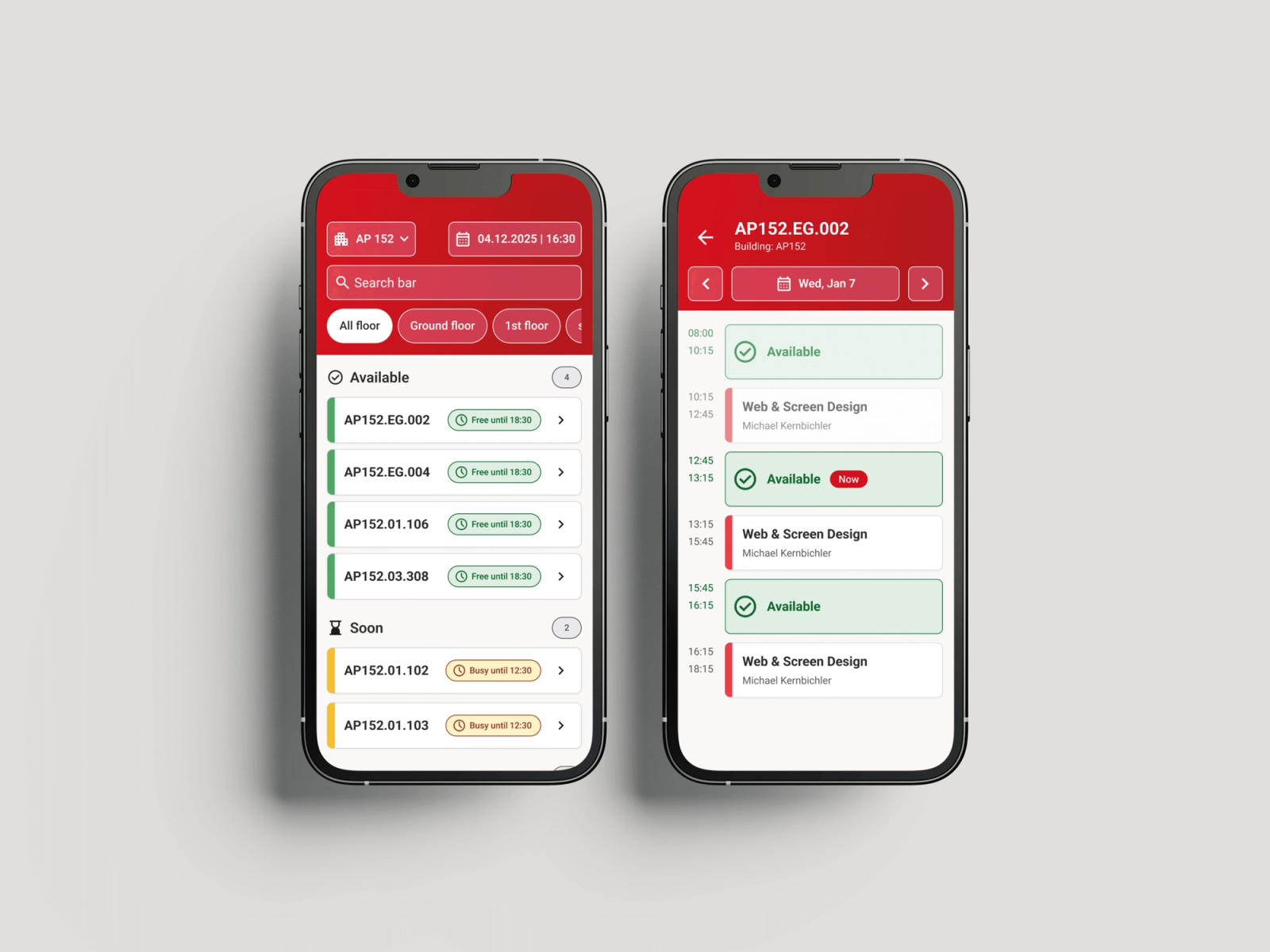
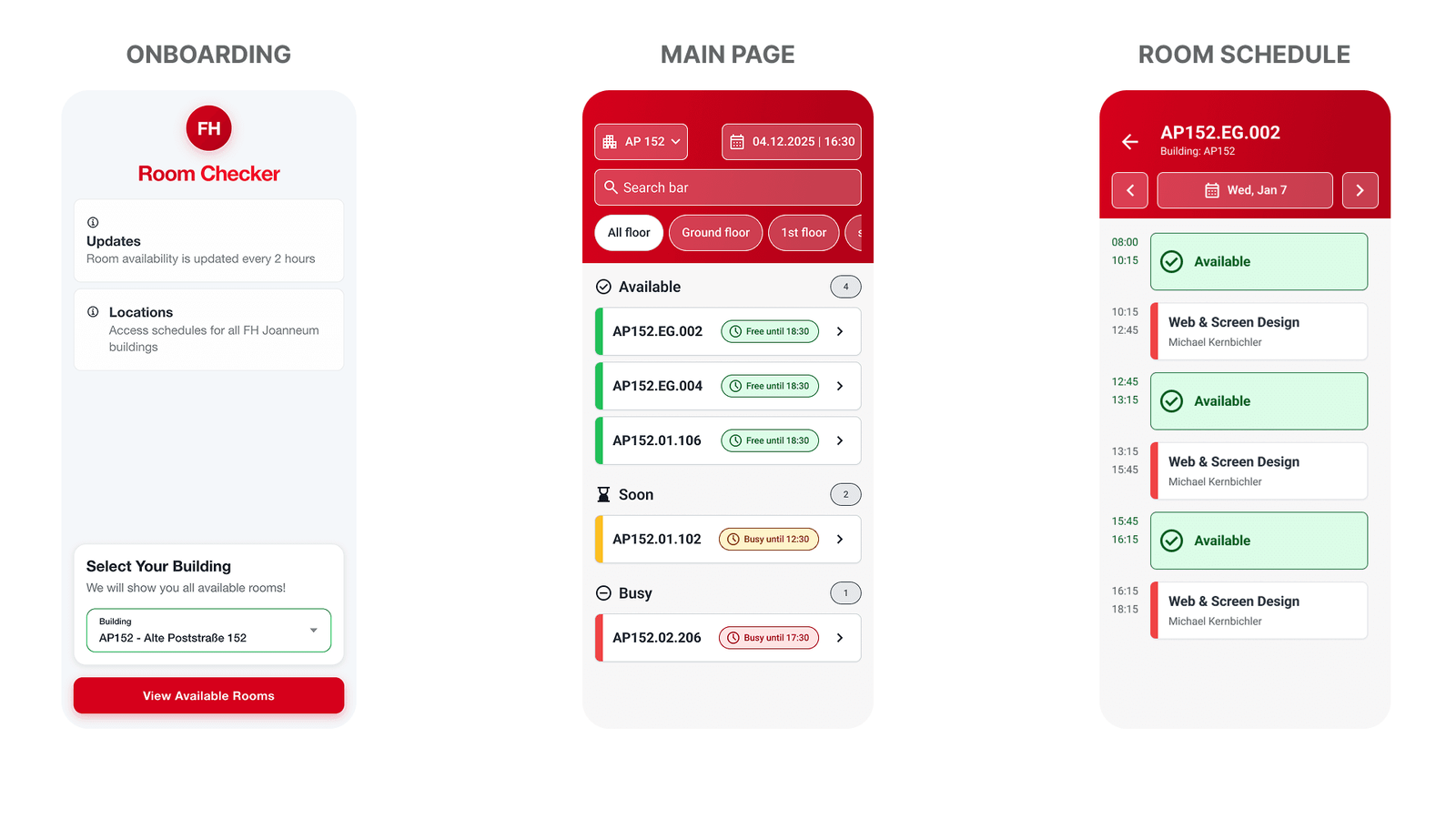
FH Room Checker is a room-availability app built for FH JOANNEUM to solve a daily campus frustration: arriving at a room and discovering it is occupied, then wasting time hunting for alternatives. Developed with internal university API with building and timetable data, designed the interface in Figma, and built the app to show what is free now, what becomes free soon, and the room’s schedule in one glance.
What Makes It Different
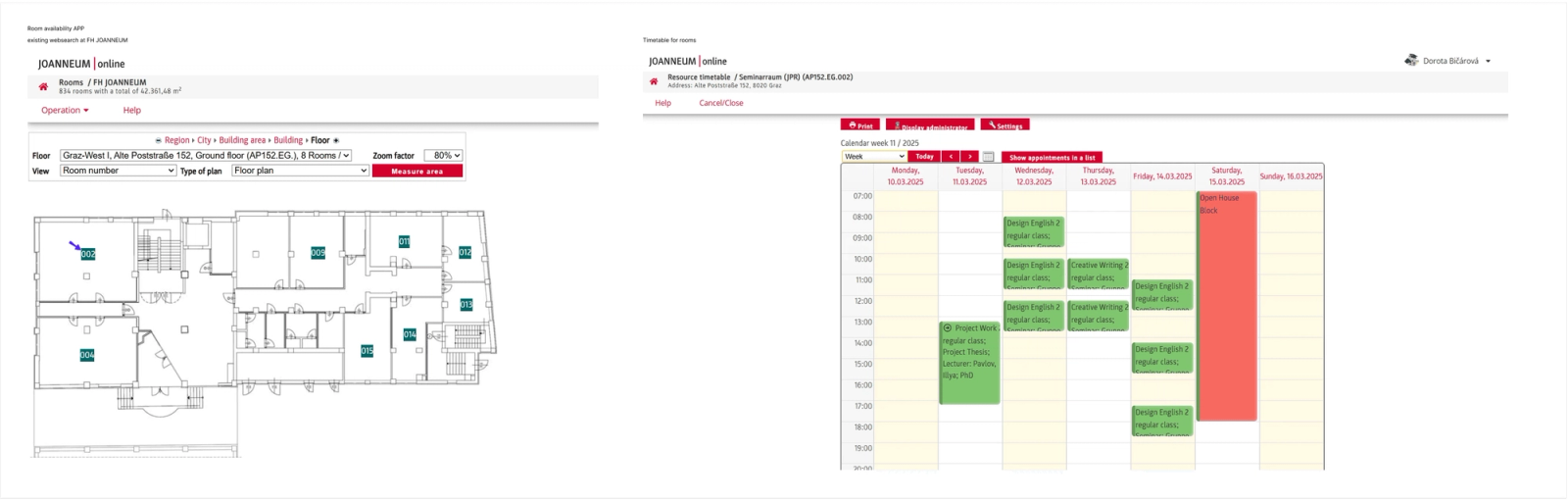
The key innovation is how the data is interpreted. Timetables describe occupied time, but students need “free time.” We reverse-engineered the schedule logic and built a backend that restructures the API output into an availability database: it keeps active classes visible while also calculating exactly when each room becomes available, then surfaces the best options first for quick wayfinding and decision-making.
Challenge
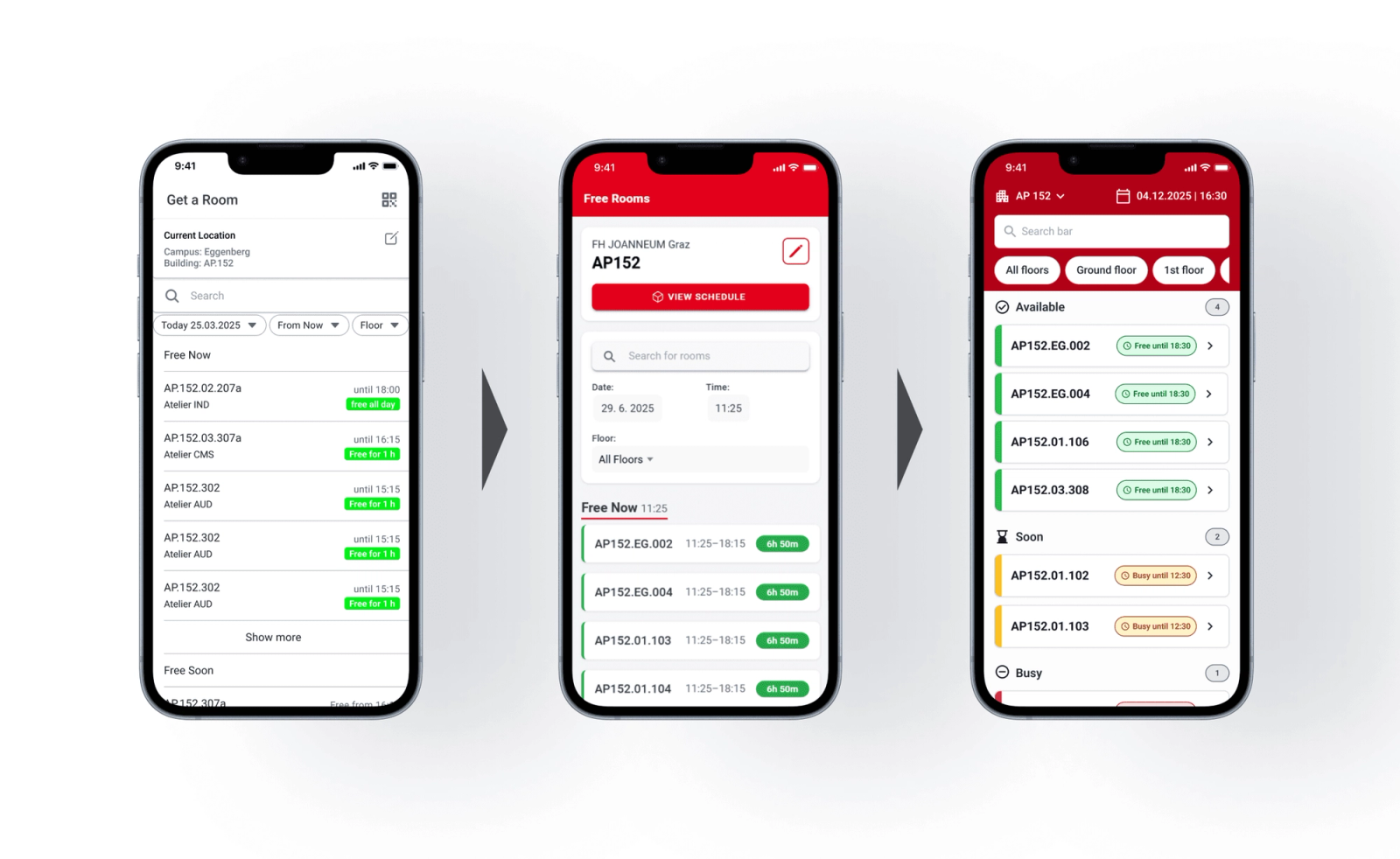
The hardest part was turning messy real-world schedule data into reliable availability. We built a Laravel/PHP backend, created a new database layer, and handled edge cases like overlaps, gaps, and find and show only usable. As our app was accessible to some of the students it let us conduct wide user testing with over 25 university Students, we iterated heavily to reduce page count and keep “less is more,” while adding invisible quality details like changing back to the live date ,when the user’s select a date, when they return, so the experience stays predictable and does not confuse users.
Results
We delivered a working system with a backend pipeline plus a streamlined front-end that lets students locate free rooms quickly, check schedules, and plan short study sessions without guessing. Adoption started even during testing, with classmates and other students using the prototype to coordinate group work and find study spaces. The app reduced time wasted walking between floors and increased confidence in room choice because availability and schedules were visible before entering.
Current Solution
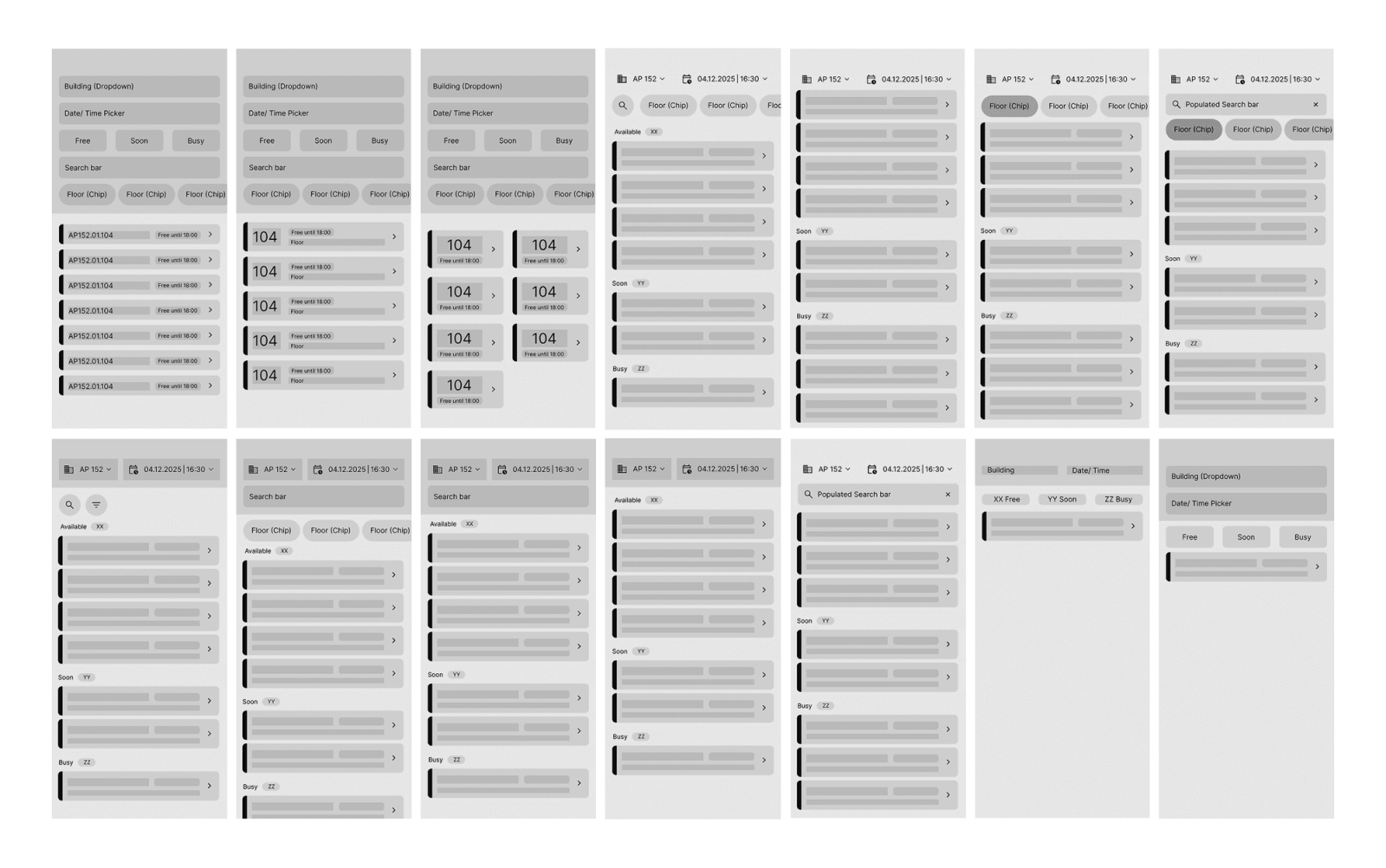
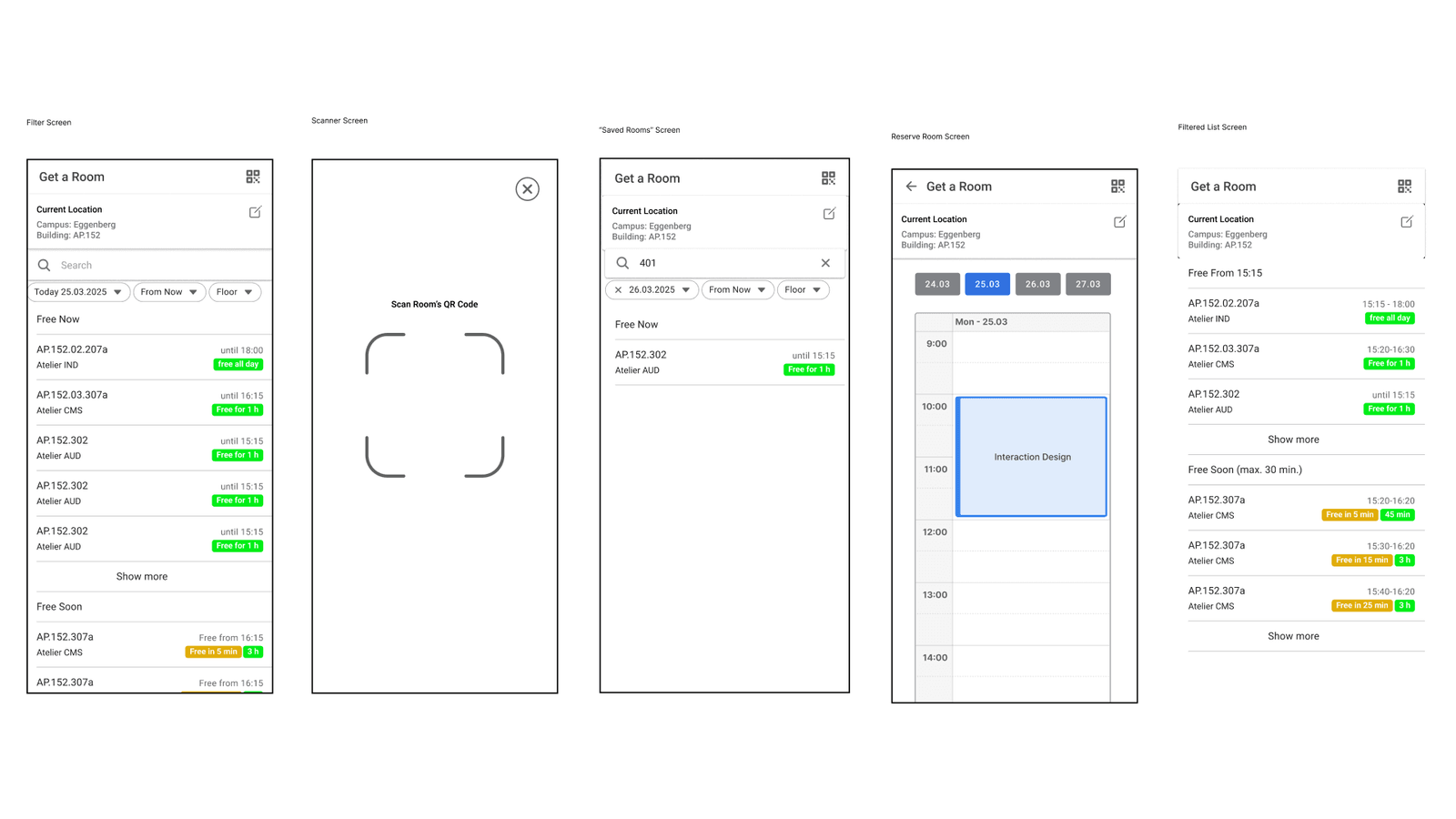
Wireframe
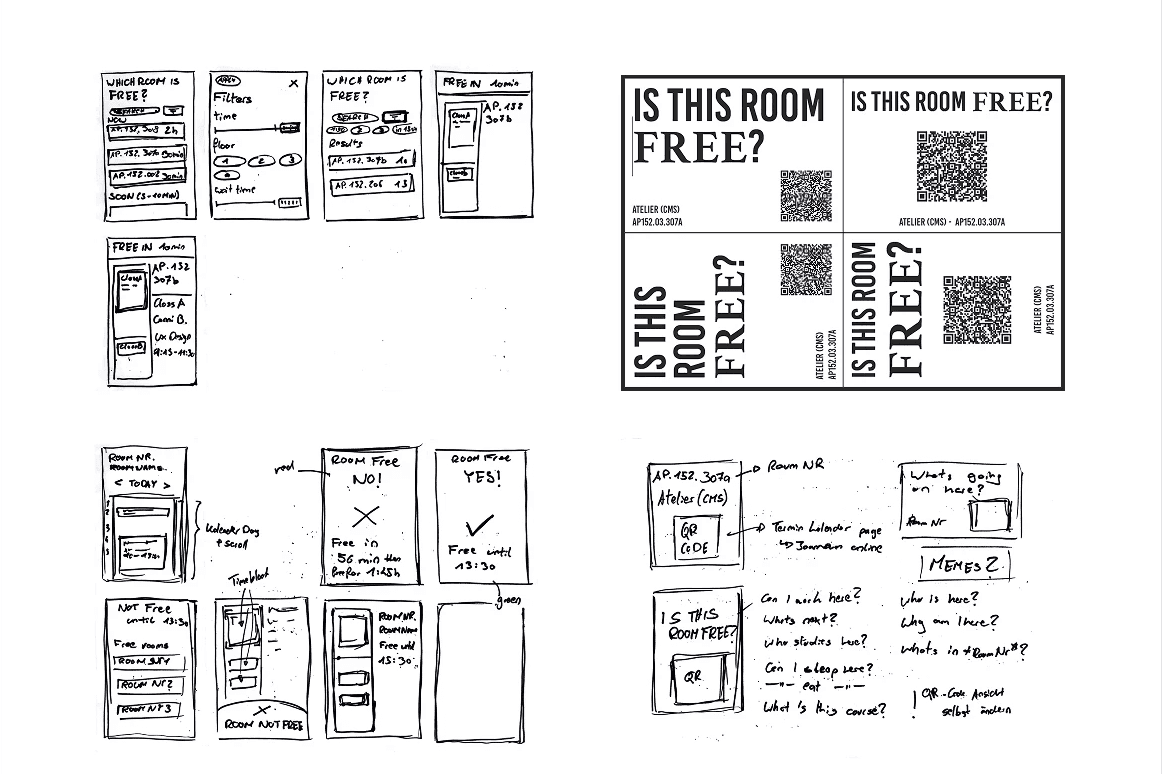
Lo-Fi
Changes We Made
Product
Stack





Project Access
Conclusion
FH Room Checker became a real product lesson, not just an interface exercise. It combined UX thinking with full-stack execution: discovering a data source, restructuring it into user-meaningful availability, and refining interaction details that shape trust. The project demonstrated how good experience design often lives in “invisible” logic and state handling, and it was rewarding to see the tool used in daily campus life and adopted into the wider FH ecosystem.